
Scaling native advertising through product-article matching
Designing an AI-powered monetization system

Date
January 2025 - May 2025
Company
BuzzFeed
Scenario
BuzzFeed’s shopping content drives significant traffic and affiliate revenue, but monetization opportunities were limited by manual workflows and underperforming ad formats.
Roles
Benchmarking ad formats & competitors
Native component design (subbuzz-based UI)
Defining placement logic
Prototyping variations
Partnering with ML on matching logic
Design handoff & implementation support
Challenge
How to scale monetization by inserting relevant products into content, without disrupting the reading experience or relying on manual editorial work.
Results
2.0% CTR
vs <1% for other ads
~$24K daily
revenue increment
41% CPM growth
vs replaced units
The problem with traditional Ads
Existing ad units are generally:
visually disconnected from the page content
interrupting the reading experience
ignored or perceived as noise
optimized for placement, not experience

The BuzzFeed problem
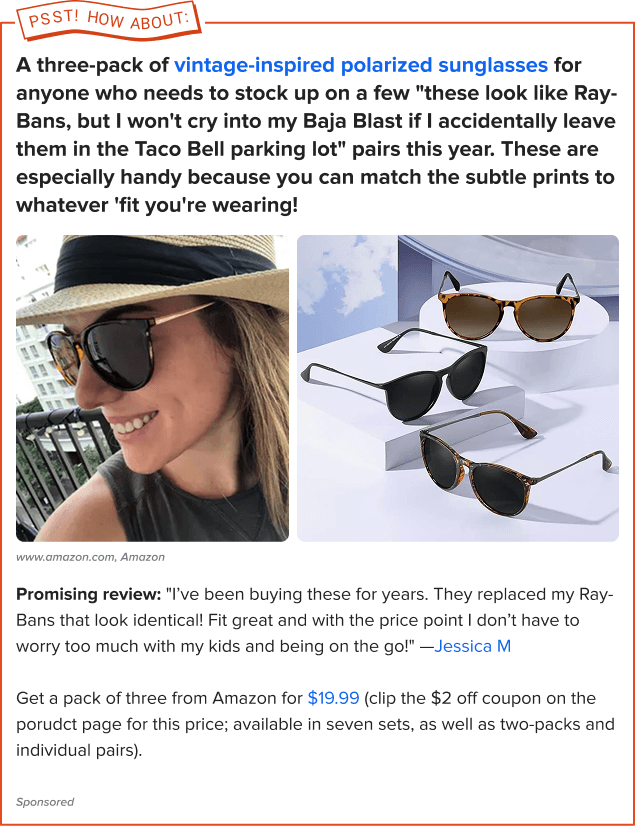
BuzzFeed’s shopping experience is not a traditional ecommerce or content page.
BuzzFeed’s shopping experience is not a traditional ecommerce or content page.
It’s:
editorial content structured as lists
made of curated product blocks (“subbuzz”)
designed to feel like content first, commerce second
Each product:
tells a small story
follows a consistent visual pattern
contributes to a cohesive reading flow
Reframing the Approach

“Where do we place ads?”

“How should monetization appear inside content?”

from ads inside content

to ads behaving like content

Reduce reliance on third-party tools

Maintain legacy segments available
We went from
“Where do we place ads?”
to
“How should monetization appear?”
The Solution: Reverb
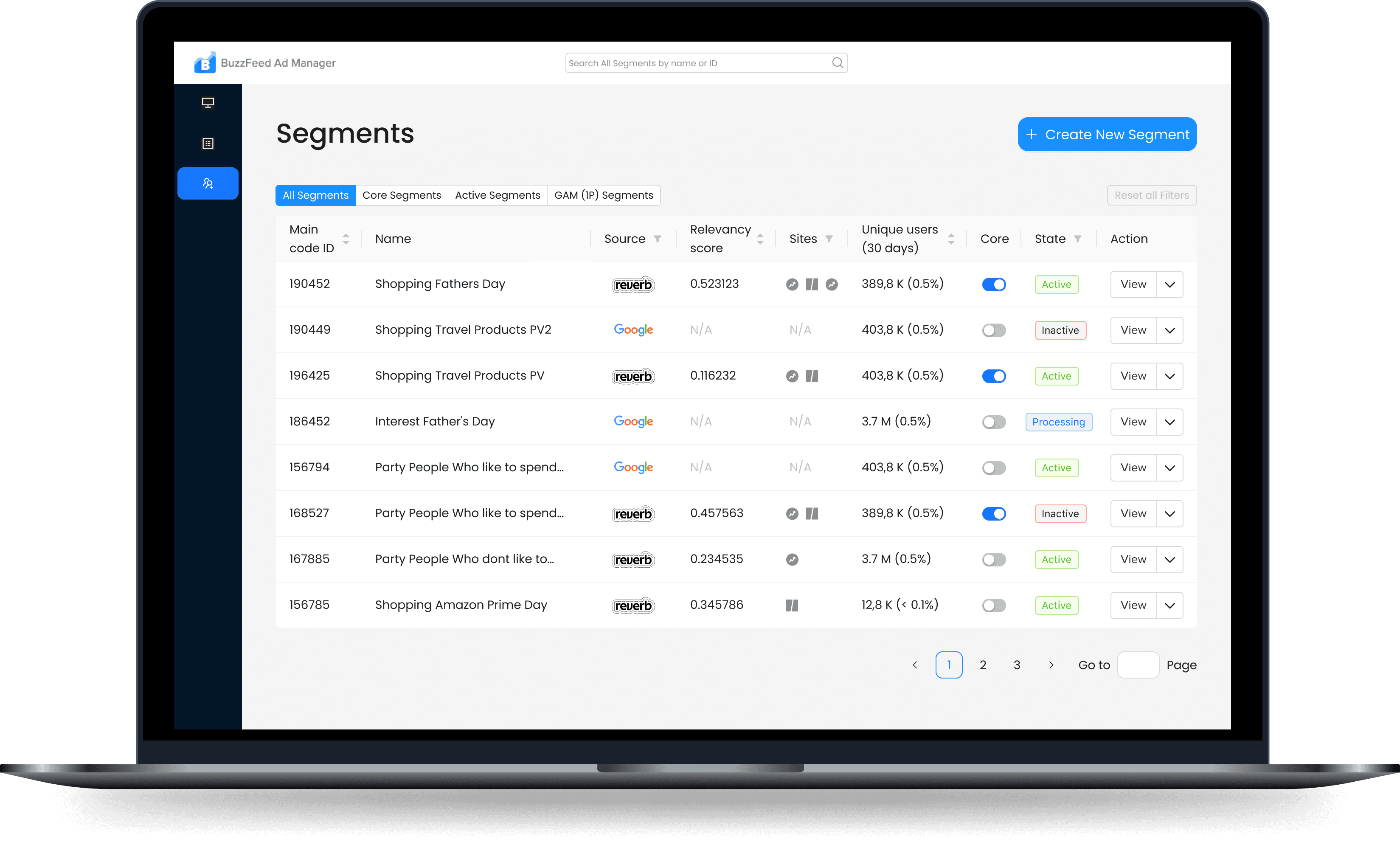
Main table
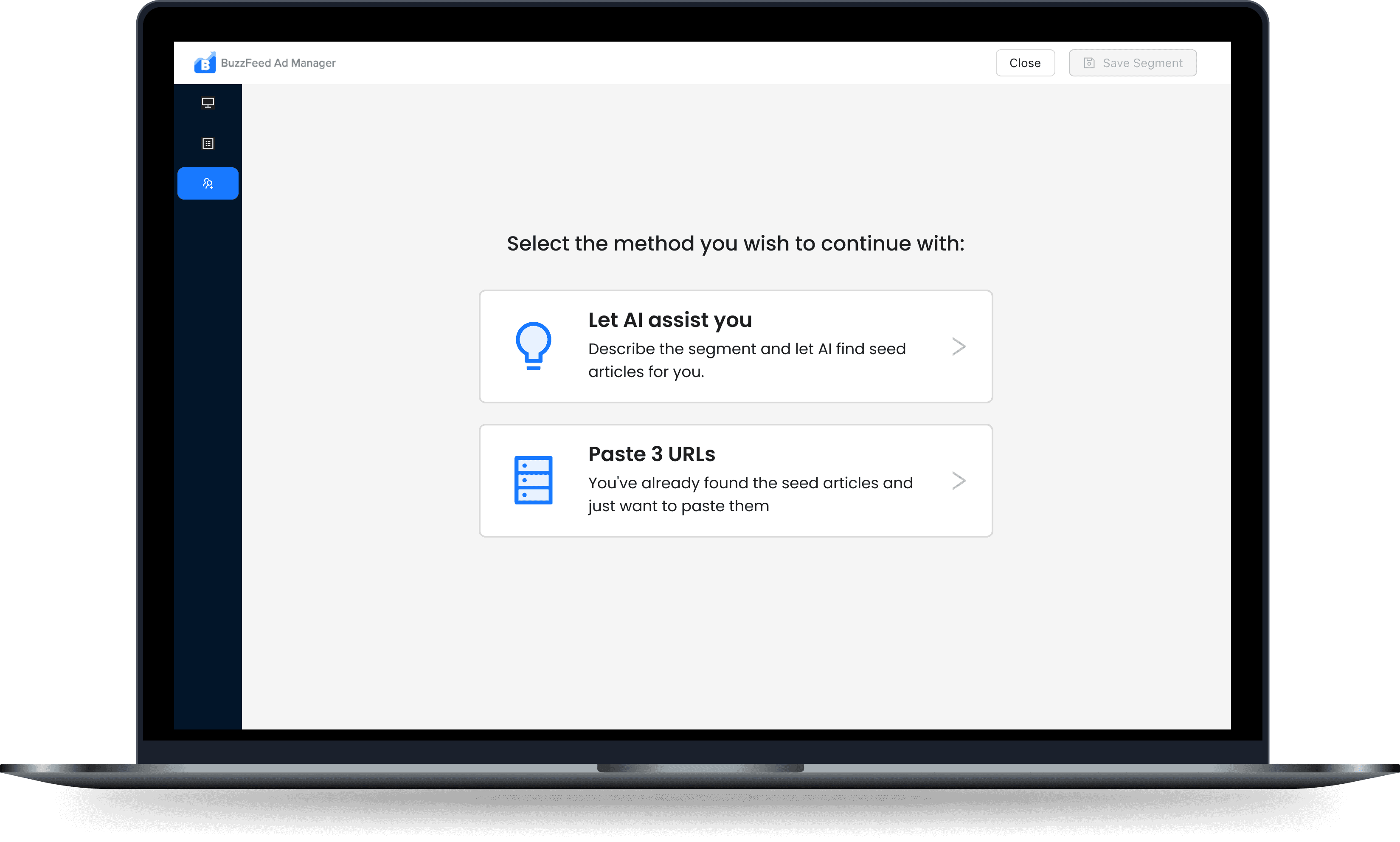
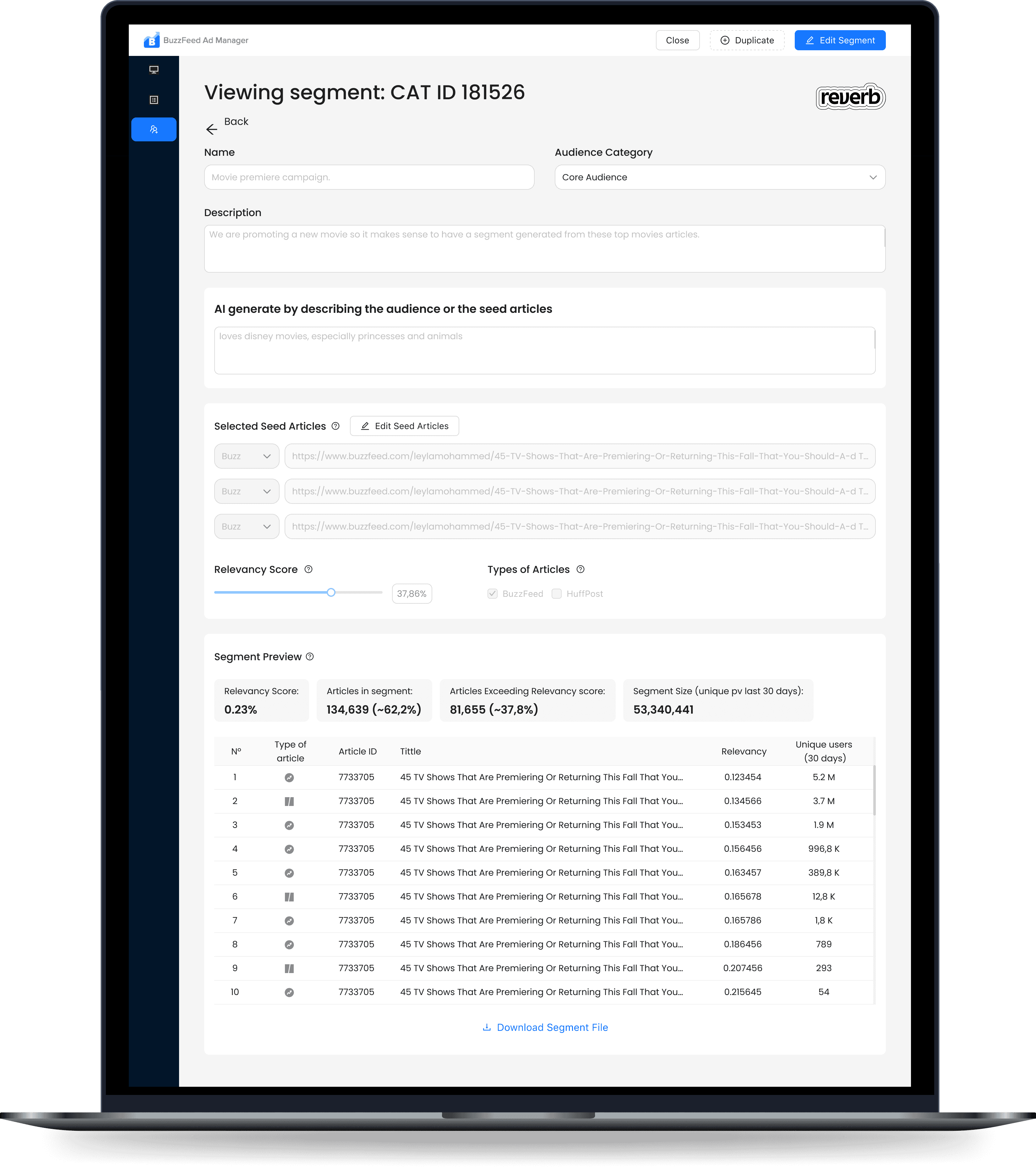
Create segment with AI
First option will allow you to do a simple prompt. AI will analyse and select matching articles to be your seed articles.
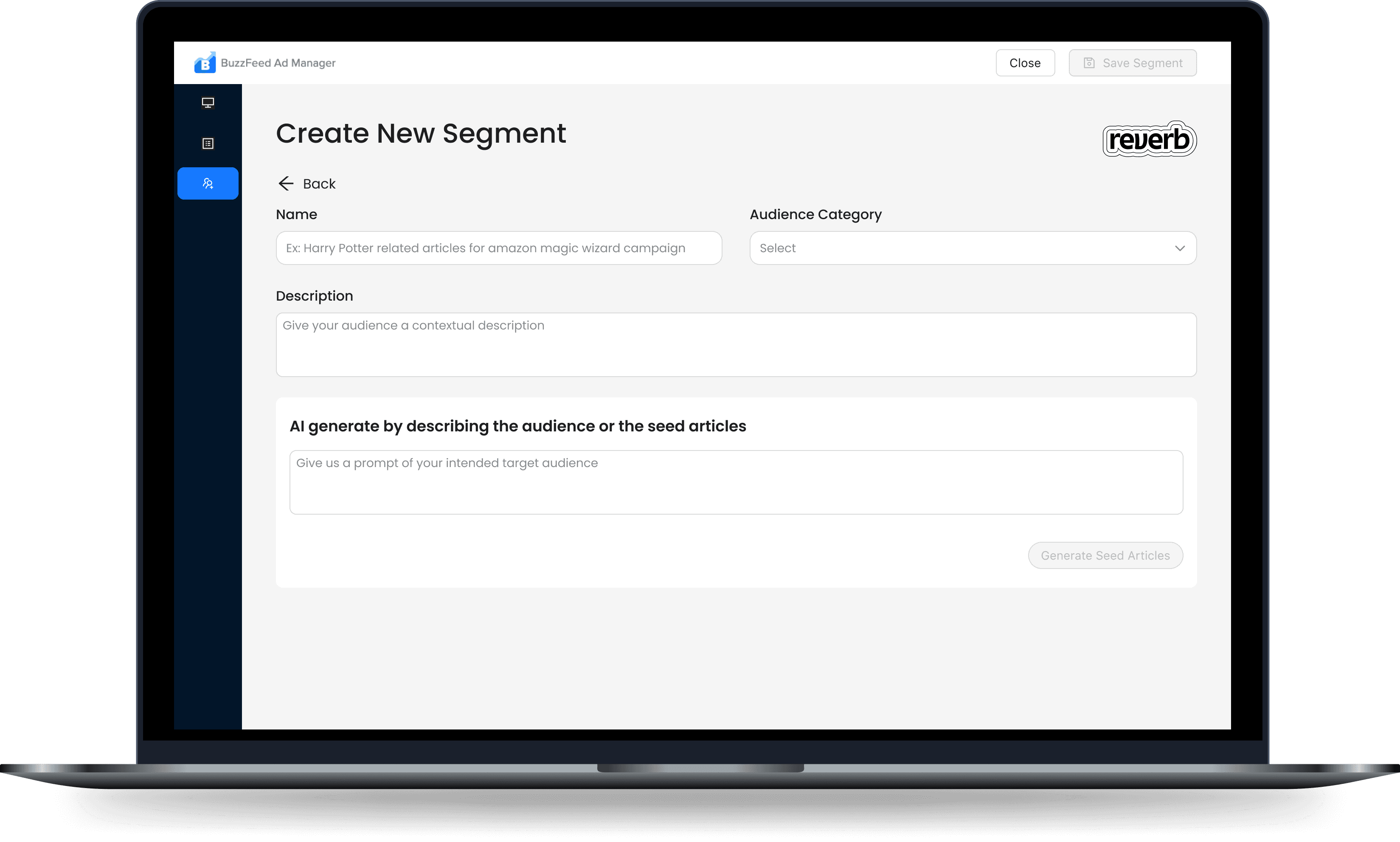
Users can simply describe the audience they want to reach in natural language.
Example: “People interested in home organization and interior design.”The AI analyzes the prompt and correlates it with existing content themes, article embeddings, and audience signals across BuzzFeed’s content ecosystem.
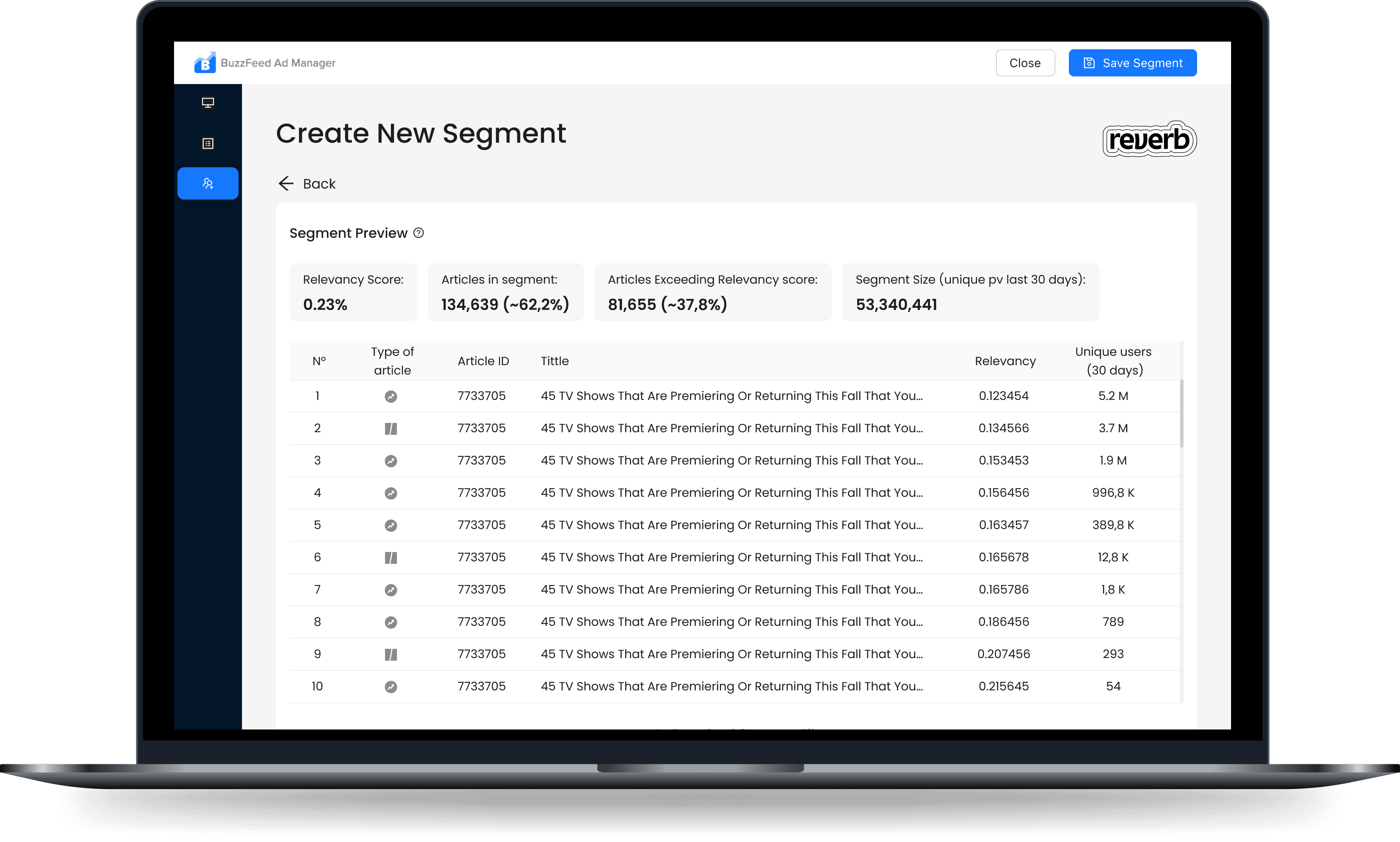
The system then generates a contextual cluster of relevant articles and audiences.
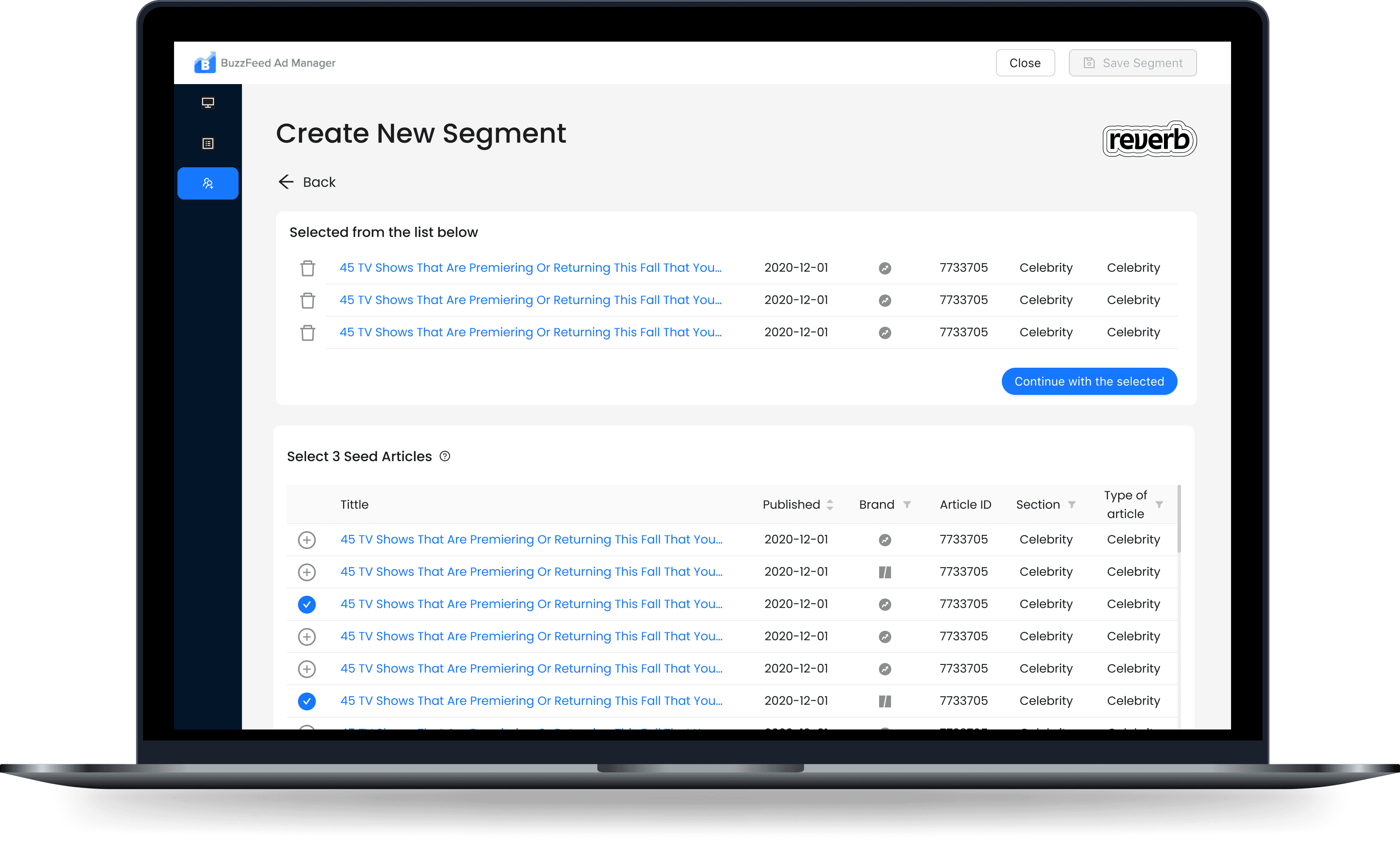
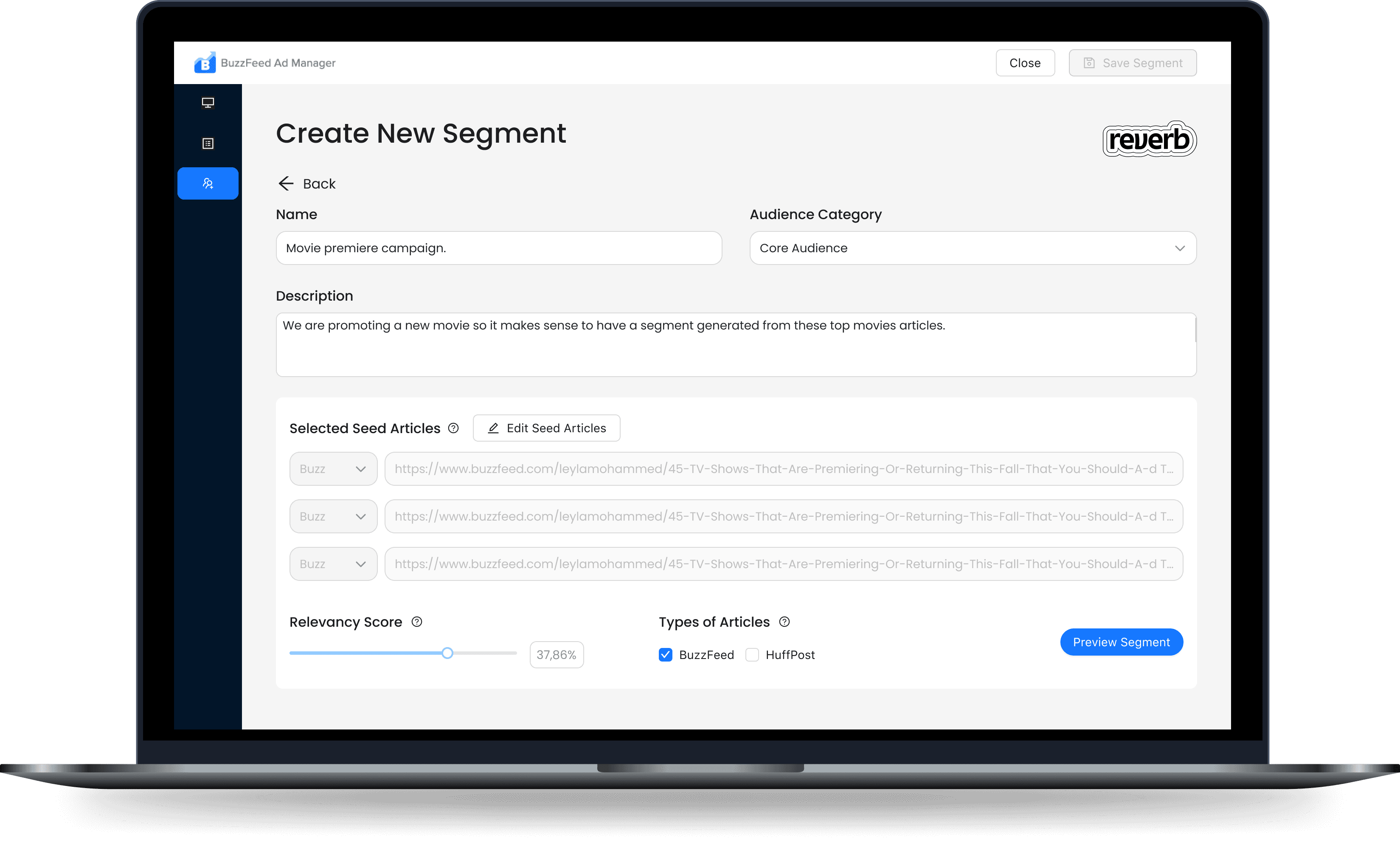
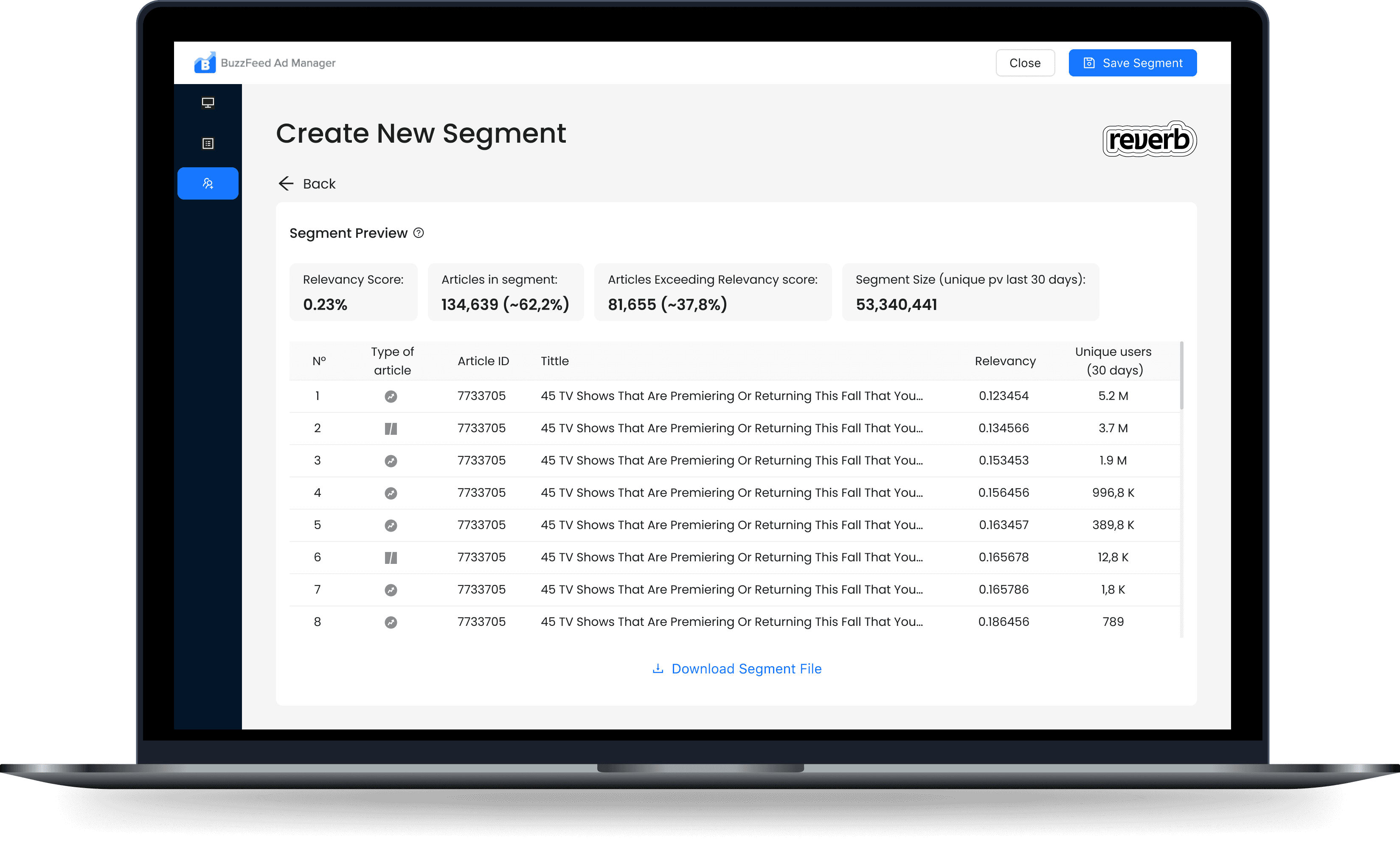
After selecting Seed articles, pick a relevancy score. This will filter how similar the segment must be. Also, this will affect its size; the stricter you are, the smaller the segment pool will be.
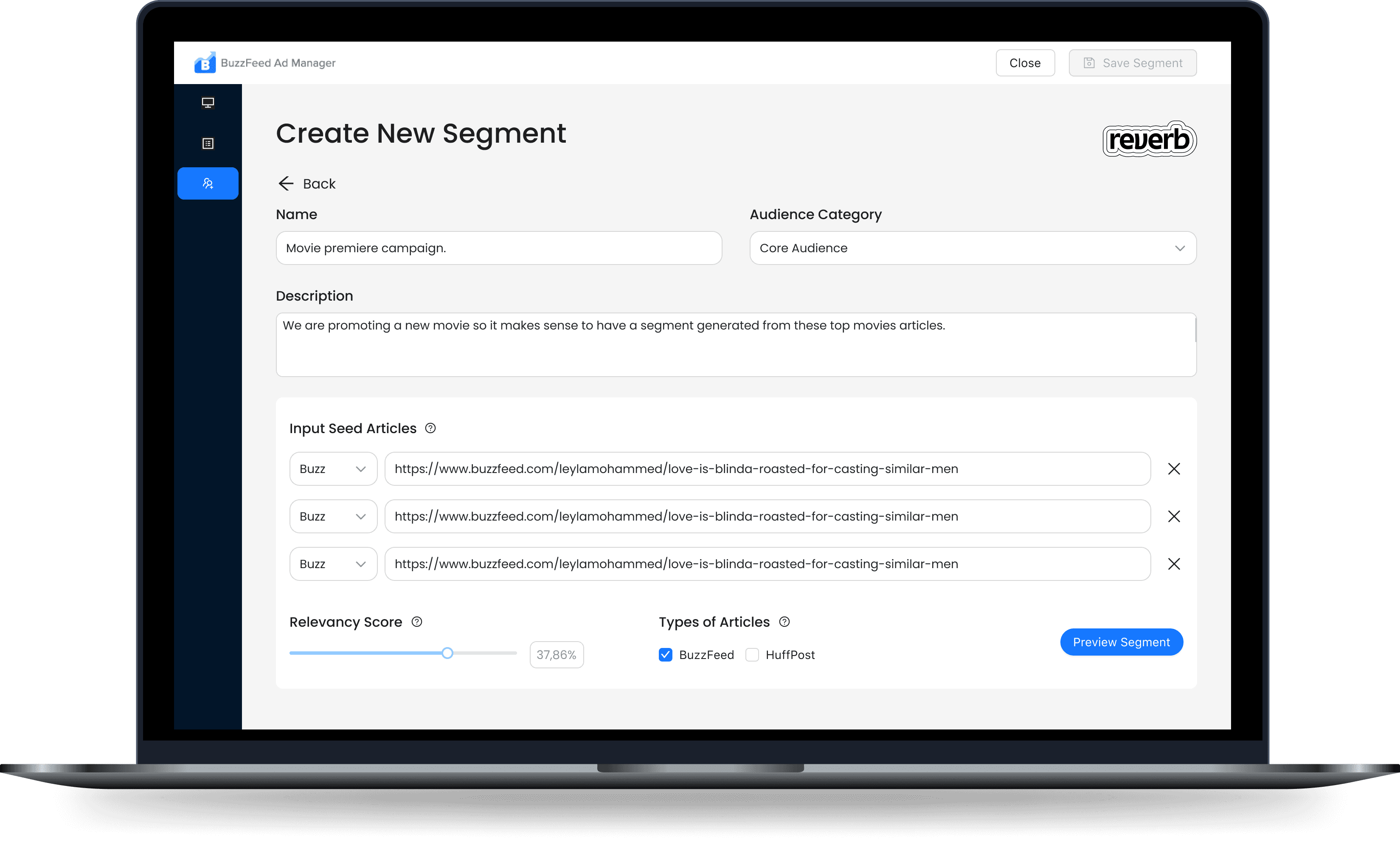
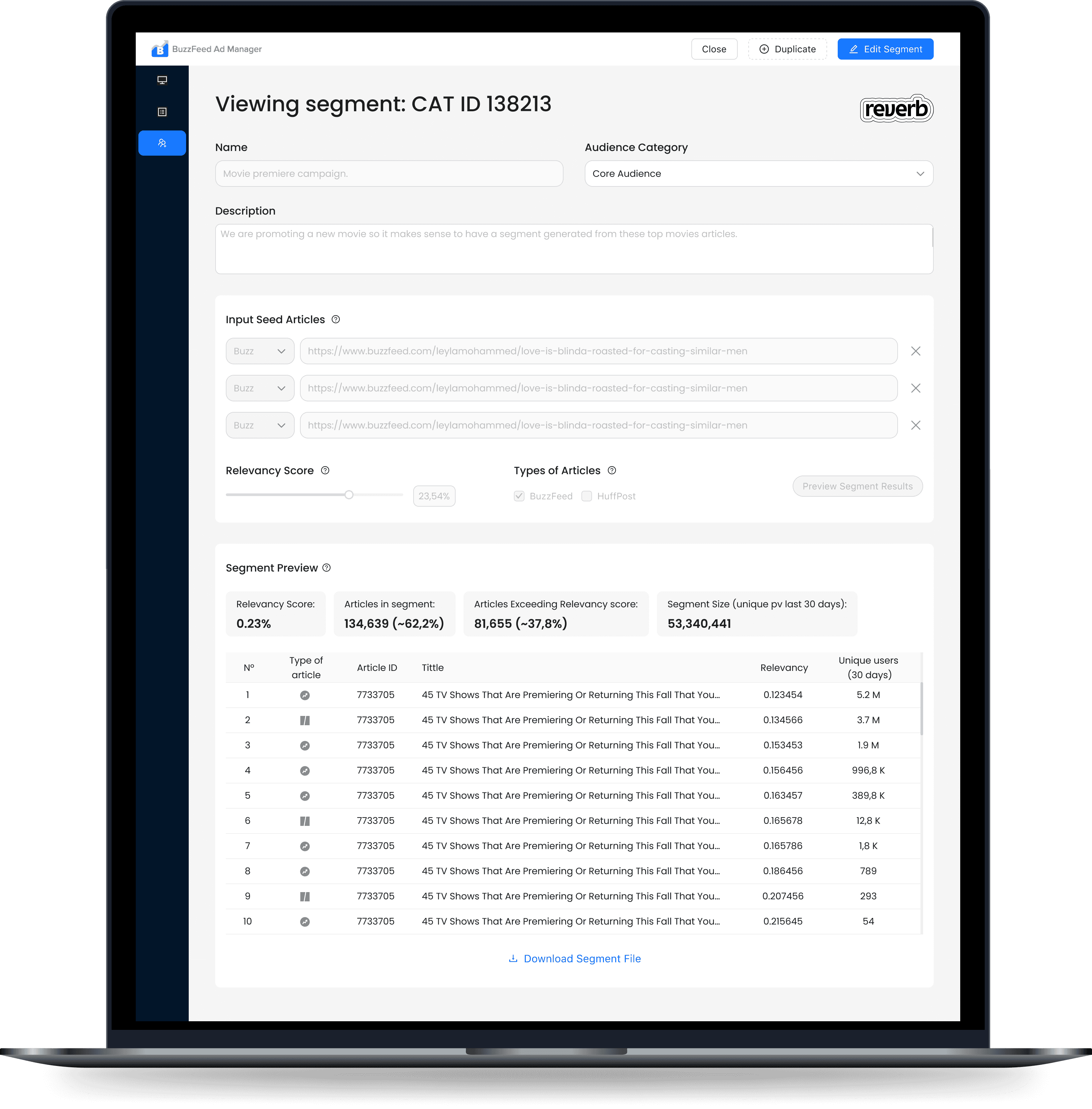
Manually input seed articles
Second option will demand a manual selection of the 3 seed articles.
For cases when Ad ops team wants to be specific or already have an idea of articles that are working good in campaigns.
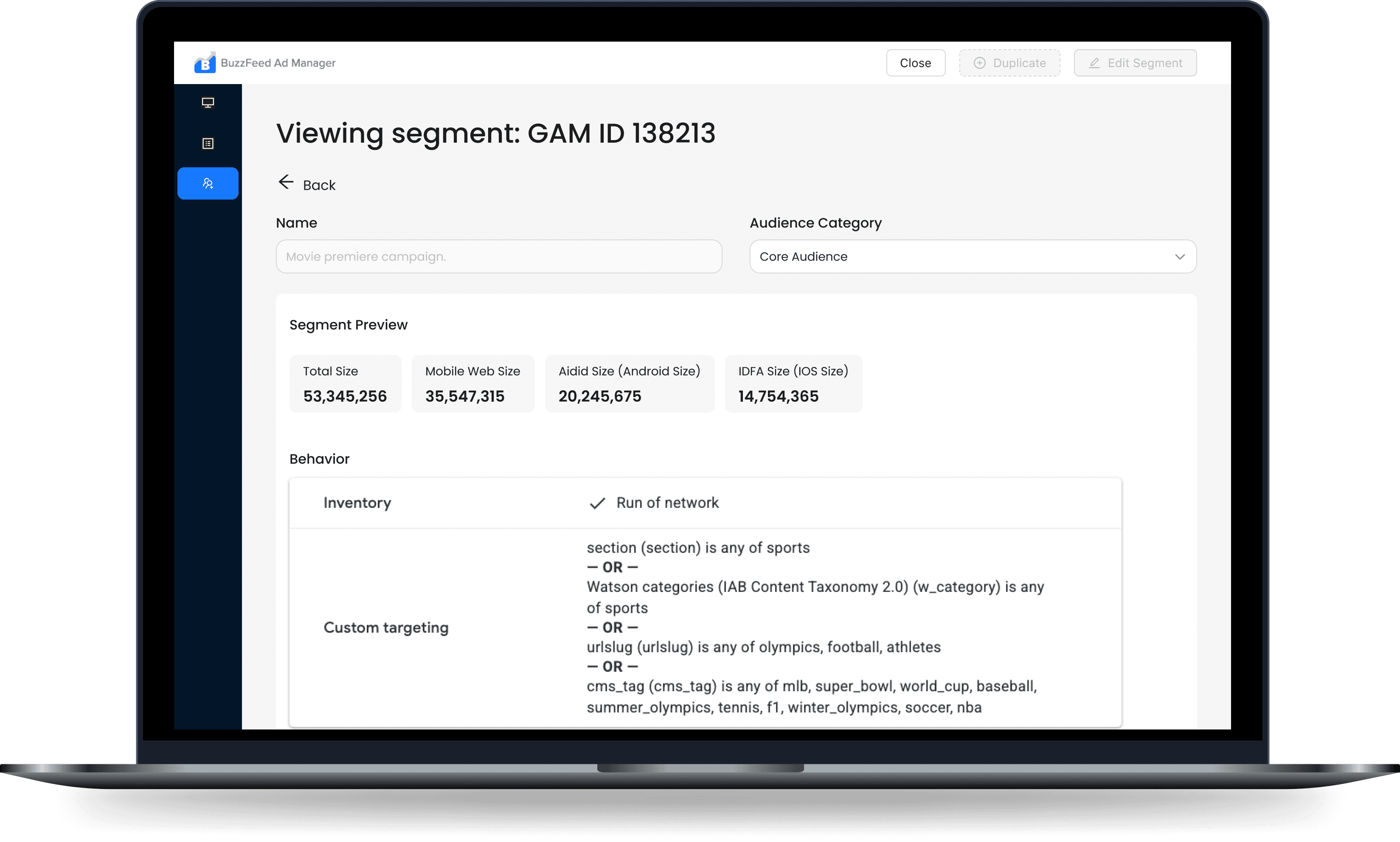
View mode
UX Key Decisions
Start from intent, not data
Users don’t think in signals, taxonomies, or attributes — they think in audiences.
Support multiple mental models
Some users think in concepts, others in examples. We support both.
Balance simplicity with control
Works with minimal input, but allows refinement.
Make the system understandable
Rather than exposing model logic, we make outputs visible.
Enable discovery
Previous tools required knowing what to target.
Shift from setup to iteration
Instant outputs, refine from there.
Make segments dynamic
Continuously updates as new content is published.
Results achieved
Cost reduction of
+500k/year
in third party segment tool cost
Increase on
2.5X CTR
cause smarter targeting means better content relevancy
Revenue increase
better results make for more valuable Ad slots
Platform unification
create segment and manage campaigns at the same tool
Time saving
to go from ad concept to live audience
Simple flow
Easy like Sunday moooorning